
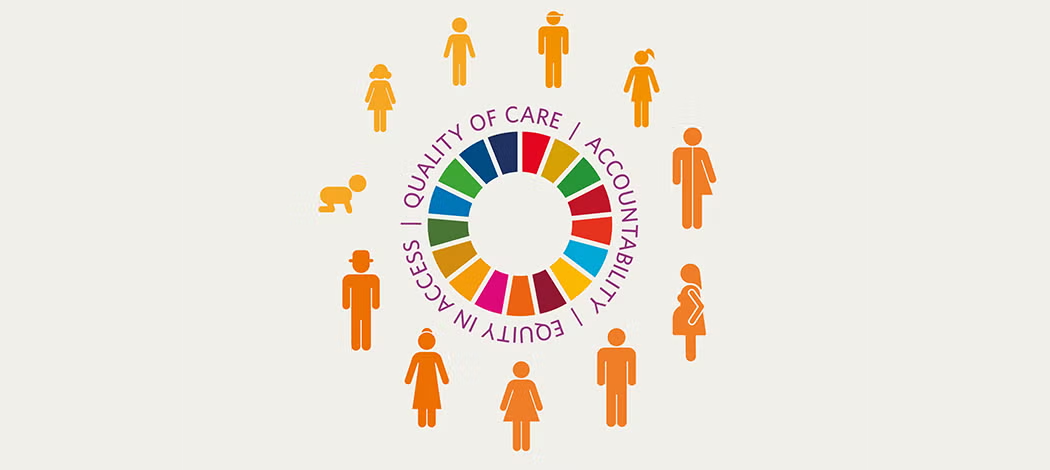
For many people, the journey to parenthood is not straightforward. Infertility affects 1 in 6 individuals globally, and while advances in reproductive medicine have created new possibilities, barriers still exist in access, funding, and legal recognition. Advocacy, both personal and collective, plays a vital role in breaking down these barriers and ensuring that fertility rights are recognized as part of basic human rights. By understanding the current challenges and opportunities, patients and allies can help push for a future where building a family is accessible, affordable, and equitable
Why Fertility Rights Matter
Fertility is more than a medical issue, it is deeply connected to identity, relationships, and wellbeing. The World Health Organization (WHO) recognizes infertility as a disease of the reproductive system, but many healthcare systems still treat fertility treatment as elective or optional care. This framing creates inequities, forcing those who seek fertility care to take on immense financial burdens to pursue IVF, surrogacy, or donor conception.
In Canada, for example, funding for fertility care varies by province. Ontario covers one cycle of IVF for eligible patients, but in many other provinces, patients must pay out of pocket. For those without financial resources, this can mean giving up on the chance to have children altogether. Advocacy is essential to argue for fertility care as part of comprehensive healthcare.
The Power of Storytelling
One of the most effective tools in advocacy is storytelling. Sharing personal experiences brings a human face to statistics and policies. When patients, surrogates, and donors speak openly about their journeys, they help reduce stigma and create awareness and education.
Building Fertility-Friendly Workplaces
Fertility rights extend beyond the clinic into the workplace. Fertility treatment often requires time off for appointments, procedures, and recovery, yet many workplaces do not provide adequate leave or support. Advocates are calling for fertility-inclusive workplace policies, such as flexible scheduling, paid leave for treatment, and coverage for fertility benefits in employee health plans.
Workplace advocacy is especially important in reducing stigma. Employees who feel supported are more likely to be open about their journeys, fostering a culture of compassion and understanding.
Global Advocacy and Equity
Around the world, fertility advocacy looks different depending on cultural, legal, and financial contexts. In Europe, many countries fund multiple rounds of IVF, reflecting a recognition of fertility care as essential healthcare. In contrast, in many low- and middle-income countries, fertility treatment is available only in private clinics at high cost, putting it out of reach for most families.
International advocacy organizations are working to close this gap, highlighting infertility as a global health issue. The World Health Organization and patient-led groups continue to push for fertility to be recognized as part of universal health coverage.
How Patients and Allies Can Advocate
Advocacy can feel overwhelming, but small steps make a difference. Patients and allies can:
- Share their stories with policymakers, media, or advocacy organizations.
- Join or support advocacy groups or communities
- Engage with employers to promote fertility-friendly workplace policies.
- Raise awareness by talking openly about infertility and correcting myths in their communities.
- Stay informed about local and national policy changes that affect fertility care.
Looking Ahead
Advocacy for fertility rights is about more than expanding access to treatment. It’s about affirming the right for all people to pursue family building without stigma, inequity, or severe financial barriers. While progress has been made, more work is needed to ensure that fertility care is recognized as essential healthcare in Canada and around the world.
At Fertility Friends Foundation, we believe in the power of knowledge, community, and advocacy. By sharing stories, and supporting and educating one another, we can work to build a future where everyone has the chance to create the family they dream of – no matter their circumstances.
References
- World Health Organization (WHO), Infertility prevalence estimates, 1990–2021 (2023).
- Assisted Human Reproduction Act, S.C. 2004, c.2.
- Government of Ontario, Ontario Fertility Program.
- Inhorn, M.C. & Patrizio, P., “Infertility around the globe: new thinking on childlessness, gender, and reproductive technologies,” Human Reproduction Update (2015).
- RESOLVE: The National Infertility Association, Advocacy for Family Building.
- Fertility Matters Canada, Advocacy Resources.