
Everything Looked Normal. So Why Couldn’t We Get Pregnant?
One of the hardest words we heard during our infertility journey wasn’t “no.”
It was “normal.”
The tests looked normal. The appointments rarely revealed anything alarming. We had already had a child, so we knew pregnancy was possibl
And yet, month after month, year after year, it wasn’t happening.
My wife, Stacie, and I never expected infertility to become such a large part of our story.
Our son was born in 2010. When we were ready to grow our family again, we assumed it would happen the way people often assume these things happen: you decide you’re ready, you start trying, and eventually there is a positive pregnancy test.
Instead, we entered a world of cycle tracking, bloodwork, appointments, fertility specialists and procedures.
We were eventually given the diagnosis so many couples receive when the pieces don’t seem to add up:
Unexplained infertility.
At first, there was almost something reassuring about that word. Unexplained sounded better than being told something was terribly wrong.
But over time, unexplained became its own kind of frustration.
Because if no one could tell us what was wrong, what exactly were we supposed to do differently?
When the next treatment becomes the only question
We did what many couples do. We kept moving forward.
One appointment led to another. One treatment led to the next. We went through more than a dozen IUIs and worked with multiple fertility specialists.
Each cycle carried its own tiny universe of hope.
Maybe this is the one.
Then came the waiting.
Then disappointment.
Then somehow finding enough hope to start again.
There was also the financial side of infertility—the part that can quietly begin influencing decisions that are already emotionally overwhelming. We eventually participated in charity races and dinners hoping to win a fertility grant, and in late 2018 we received $5,000 toward treatment.
In one of the strangest and most beautiful twists in our story, we conceived naturally that same night.
Our daughter was born in 2019.
We were incredibly grateful.
But we still didn’t have an answer.
Why had it taken so many years? Why had treatment failed again and again? Why could pregnancy seemingly happen naturally after so much difficulty?
When we later tried to grow our family again, those unanswered questions returned with us.
Eventually, we reached a point where IVF was being presented as essentially our remaining option.
IVF is an extraordinary tool, and for many families it provides a path to parenthood that would otherwise not exist. But for us, there was another reality we couldn’t ignore:
We simply couldn’t afford it.
By that point, we had spent what we had and taken on debt from infertility treatment and other medical expenses. IVF might have been our next medical option, but financially, it wasn’t an option we could simply choose.
Unless we somehow found the money or received another fertility grant, we needed to decide what came next.
And that forced us to ask a question we could no longer ignore:
If everything looked “normal,” was there anything we had not explored yet?
That question changed our journey.
Asking a different question
Instead of asking only, “What treatment do we try next?” we began asking:
“What haven’t we looked at yet?”
That did not mean rejecting fertility medicine. It did not mean believing there was some secret cure our doctors had missed.
It meant becoming more curious.
Stacie began looking more closely at her overall health and had bloodwork reviewed with a physician who approached wellness through a broader lens. We started learning more about nutrition and nutrient status, hormones, stress, sleep, environmental exposures and other everyday factors that can influence overall health.
We started thinking about the body less like a collection of separate systems and more like an interconnected whole.
And I started realizing something else.
For much of infertility, I had thought of myself as the support person.
Stacie was the one whose cycles were tracked. Her body was discussed. She carried the physical burden of pregnancy and pregnancy loss.
My job, I thought, was to be strong for her.
But infertility was happening to both of us.
Partners experience the waiting, the financial pressure, the grief, the fear of saying the wrong thing and the helplessness of watching someone you love hurt when you cannot fix it.
And our health matters too.
That realization changed how I participated in our fertility journey. I stopped thinking only about how I could support Stacie and began thinking more about how we could approach our health, questions and decisions together.
Then something changed
I hesitate whenever I tell the next part of our story, because I never want another couple to hear it as a promise.
We cannot prove that one supplement, one dietary change, one lab result, one lifestyle adjustment—or even all of them together—caused what happened next.
Our story is not a fertility formula.
But it is our story.
After years when positive pregnancy tests were rare, Stacie became pregnant three times in approximately 18 months.
The first pregnancy ended in miscarriage near the end of the first trimester.
Months later, she became pregnant again.
We lost that baby too.
Pregnancy after infertility can already feel frightening. Pregnancy after loss brings a different kind of fear entirely.
Hope and grief somehow learn to occupy the same space.
Then, in August 2024, Stacie became pregnant again.
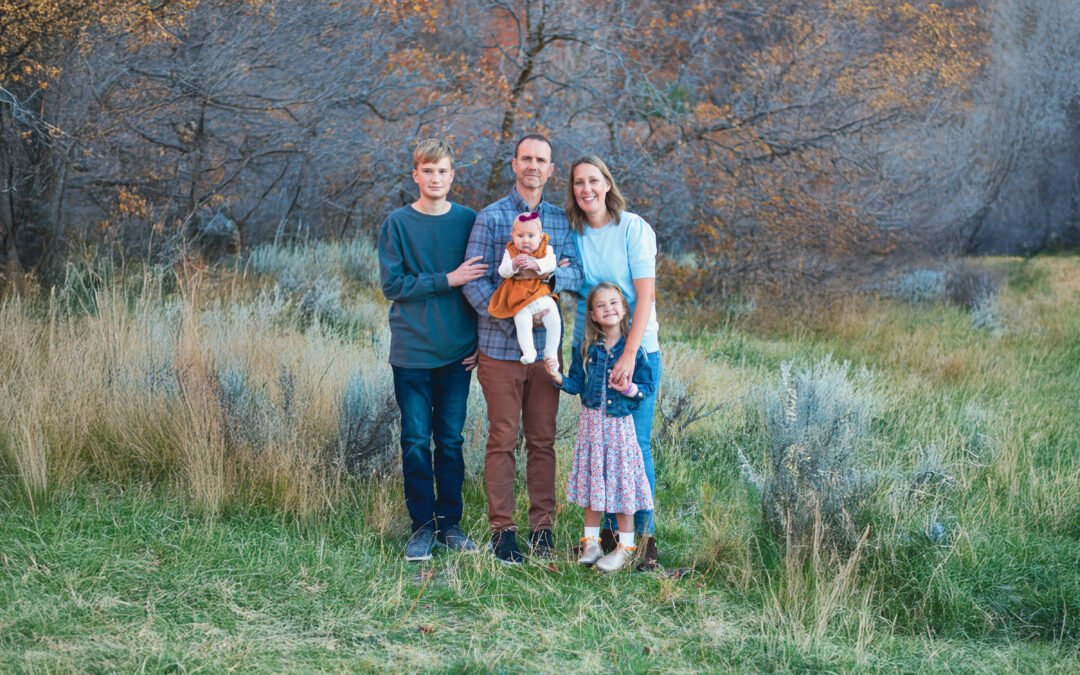
In May 2025, we welcomed our youngest daughter.
After so many years of wondering whether our family would ever grow again, I found myself holding this little girl and
thinking about just how different our story looked from the one we had once imagined.
What our journey actually taught us
I wish infertility stories came with clean conclusions.
Ours doesn’t.
I cannot tell another couple, “This is what worked. Do these things and you will get pregnant.”
That would not be fair, honest or scientifically responsible.
What I can say is that our experience changed the way I think about the word unexplained.
Sometimes unexplained may truly remain unexplained.
But I also believe it can be an invitation to keep asking thoughtful questions.
Have we looked at the whole picture?
Are there things in our medical history worth revisiting?
Are there nutritional or lifestyle factors worth discussing with a qualified professional?
Have both partners really been included in the conversation?
Are we making decisions because we understand our options—or because we feel so overwhelmed that we simply want someone to tell us what to do next?
And perhaps the most important question:
Do we feel heard?
Infertility has a way of making life feel like it is happening to you.
The next cycle.
The next appointment.
The next bill.
The next pregnancy announcement.
The next negative test.
And sometimes, the moment you look at an ultrasound screen and learn there is no heartbeat.
Asking better questions gave us back a small piece of participation in a process that had often left us feeling powerless.
It didn’t guarantee the ending.
It simply helped us move forward with more clarity.
If you are somewhere inside your own fertility story right now—whether you are at your first appointment, your fifth IUI, considering IVF, grieving a pregnancy, worrying about how to pay for treatment, or simply wondering why everything appears “normal” when nothing feels normal—I hope you know this:
You are allowed to keep asking questions.
You are allowed to seek another perspective.
You are allowed to involve your partner.
And you are allowed to want more than the words “we don’t know.”
Sometimes the next step isn’t immediately having another answer.
Sometimes it begins with a better question.
About the author
Dee Sefcik is an Alberta-based speaker, wellness educator and founder of Naturally Limitless. After years of unexplained infertility, fertility treatments and pregnancy loss with his wife, Stacie, Dee now shares their lived experience with a particular focus on patient self-advocacy, foundational wellness and the often-overlooked husband and partner perspective.
If parts of Dee and Stacie’s story sound familiar—and you’re wondering what they began exploring when they stopped asking only “What treatment comes next?”—Naturally Limitless offers a free Unexplained Fertility Starter Map designed to help women and couples organize their questions, identify foundational areas that may be worth exploring and prepare for more informed conversations with their healthcare team.
Read more of their story and get the free Starter Map at https://naturallylimitless.com.